
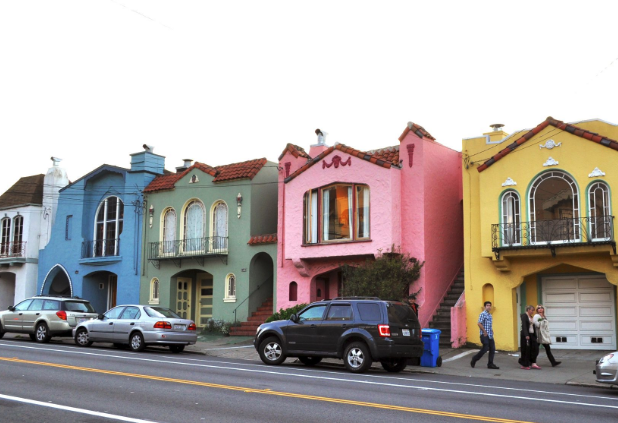
Two homes down the block from each other can close forty thousand dollars apart, and the listing sheet won’t tell you why.
Price per square foot is the first number every buyer reaches for, and in the Sunset it’s often the least useful one. Two 1,400-square-foot houses can carry the same $/sqft on paper and be worth entirely different amounts, because that number treats a converted garage room the same as a code-compliant bedroom, and a 1962 kitchen the same as one that was gutted last year. It also ignores lot depth, which varies more block to block here than almost anywhere else in the city — a lot on the flats near 19th Ave reads nothing like a lot two blocks south in Parkside, where depths open up considerably closer to Sloat. A deeper lot with real yard space quietly adds value that per-square-foot math simply can’t see.
The houses that outperform their $/sqft comps are rarely the biggest. They’re the ones where every square foot is doing real work — legal bedrooms, usable outdoor space, a layout that doesn’t require a buyer to imagine a renovation before they can imagine living there.
Why $/Sqft Falls Apart West of 19th Avenue
Price per square foot is the first number every buyer reaches for, and in the Sunset it’s often the least useful one. Two 1,400-square-foot houses can carry the same $/sqft on paper and be worth entirely different amounts, because that number treats a converted garage room the same as a code-compliant bedroom, and a 1962 kitchen the same as one that was gutted last year. It also ignores lot depth, which varies more block to block in the Sunset than almost anywhere else in the city. A deeper lot with real yard space quietly adds value that per-square-foot math simply can’t see.
The houses that outperform their $/sqft comps are rarely the biggest. They’re the ones where every square foot is doing real work — legal bedrooms, usable outdoor space, a layout that doesn’t require a buyer to imagine a renovation before they can imagine living there.
The Renovation Line: What’s Actually Turnkey vs. What Just Looks It
Sunset inventory splits cleanly into two camps: homes that have been thoughtfully updated and homes wearing a fresh coat of paint over original 1940s bones — the same post-war “Sunset Special” bones you’ll find repeated block after block between Irving and Taraval. Buyers increasingly can tell the difference, and the comps reflect it. The gap isn’t cosmetic — it’s electrical panels, foundation work, and whether the kitchen was actually re-plumbed or just re-faced.
- Homes with completed structural and systems work carry a premium buyers will pay for immediately — no permits to pull, no contractor to vet, no six months of living around construction.
- Homes with disclosed, documented renovation history close faster and with fewer contingencies, because the buyer isn’t discounting for the unknown.
- Homes marketed as “has great potential” now read as a discount opportunity to sophisticated buyers, not a blank canvas — which shows up as a lower final number, not a higher one.
Parking, Lot Depth, and the Line Items Never on the Flyer
Off-street parking is worth more in the Sunset than almost anywhere else in San Francisco, simply because so many of these blocks were built before garages were standard — a legacy you can still see on the narrower lots flanking the Sunset Blvd median, where curb parking is the norm rather than the exception. A legal, code-compliant garage, not a curb cut and a prayer, consistently separates the top comp on a block from the one just below it.
- A garage with room for a car and storage adds real, spendable equity, not just curb appeal, especially on the deeper lots common toward Parkside and the Stern Grove-adjacent blocks.
- Usable rear yard space, versus a yard that’s mostly side setback, shows up in resale value even when it never appears in a listing photo.
- Lot width and depth relative to the block average now factor meaningfully into how sharp buyers evaluate a lot, because it changes what the home can become later.
Light, Fog Line, and the “View” That Isn’t a View
The Sunset’s microclimates are hyper-local — sometimes block by block — and buyers who’ve lived here know it, even when they can’t articulate it on a spec sheet. The fog line doesn’t sit still: it tends to burn off first on the higher ground near Golden Gate Heights and Grand View Park, while blocks closer to the Great Highway and Ocean Beach can hold gray well into the afternoon. Southern exposure, distance from the beach, and a home’s orientation to afternoon light all quietly influence what a buyer is willing to pay, even though none of it shows up in a square footage count. A house with genuine afternoon sun in its living space will often out-price a technically superior comp that sits a few blocks closer to the water.
The ADU Question: Where the Next Wave of Value Is Hiding
San Francisco’s evolving ADU and density policies have started to change what a Sunset lot is worth on paper, independent of the house sitting on it today. This matters most on the deeper lots concentrated toward Parkside and the streets backing up to Stern Grove, where there’s actually room to build. A property with a legal path to an in-law unit or rear ADU is being valued differently by sharper buyers and investors — not for what it is today, but for what it can responsibly become. This is one of the fastest-moving factors in current comps, and one of the easiest to miss if you’re only comparing what’s built, not what’s buildable.
How We Actually Read a Comp
- We start with proximity — not just “the Sunset,” but the exact stretch of block, since the neighborhood’s character shifts every few streets between Irving, Judah, and Taraval.
- We separate what’s cosmetic from what’s structural — what’s disclosed as “updated” versus what’s been verified through permits and inspection.
- We evaluate the lot for legal accessory potential, not just current square footage.
- We factor in terms and credits alongside the sale price, because two similar houses with very different concession structures aren’t actually comparable at face value.
This is the same process we walk every client through before we set a list price or write an offer — because a comp sheet only tells you what happened. It takes the details to tell you why.
The Montgomery Lee Bottom Line
The Sunset rewards buyers and sellers who look past the headline number. Renovation quality, lot depth, parking, light, and ADU potential routinely explain a forty- or fifty-thousand-dollar gap between two homes that look identical on paper — and in a neighborhood where the fog line and the lot depths shift every few blocks, those details matter more here than almost anywhere else in the city. Whether you’re pricing a listing or deciding what to offer, the comps are only the starting point — reading them well is what actually gets you to the right number.
Frequently Asked Questions
Q: Why did the house down the street sell for so much more than mine when it’s the same size?
It’s almost never really “the same house.” The gap usually comes down to two or three of the factors above — a legal garage, a documented kitchen renovation, a deeper lot, or a rear-facing living room that catches afternoon sun. We walk both properties and show you exactly where the value split happened.
Q: Is it worth renovating before I list, or should I let the buyer do it?
It depends on the block and the buyer pool. In stretches of the Sunset where inventory is mostly renovated, an original-condition home can quietly cap its own offers before showings even start. In blocks where buyers expect a project, a light refresh often outperforms a full remodel on return. This is worth a walkthrough before any contractor gets a call.
Q: Does an unpermitted garage conversion help or hurt my value?
It depends entirely on how it’s disclosed and how a buyer’s lender treats it. Sometimes it adds usable space; sometimes it becomes a financing obstacle that shrinks your buyer pool. We look at this line by line, not as a blanket rule.
Q: How much should I actually weigh ADU or in-law potential when comparing homes?
More than most listing sheets suggest. It won’t move a comp today the way a finished kitchen will, but it’s increasingly part of how forward-thinking buyers and investors underwrite a purchase. We factor it in as future value, not current value — the two shouldn’t be priced the same.
Q: Should I price to my own renovation, or to what the block is actually paying for?
To the block, every time. The homes that overperform at resale are priced to what buyers on that specific stretch have shown they’ll pay — not to what the owner spent or believes the upgrades are worth. This is exactly the kind of read that benefits from a second set of eyes with current comps in hand.